Large Hop Clover
Home / Weed identification / Large Hop Clover
Pennsylvania weed ID · Lawn broadleaf
Large Hop Clover
Trifolium campestre · Fabaceae (pea / legume family)
- Winter annual
- Broadleaf
- Non-native
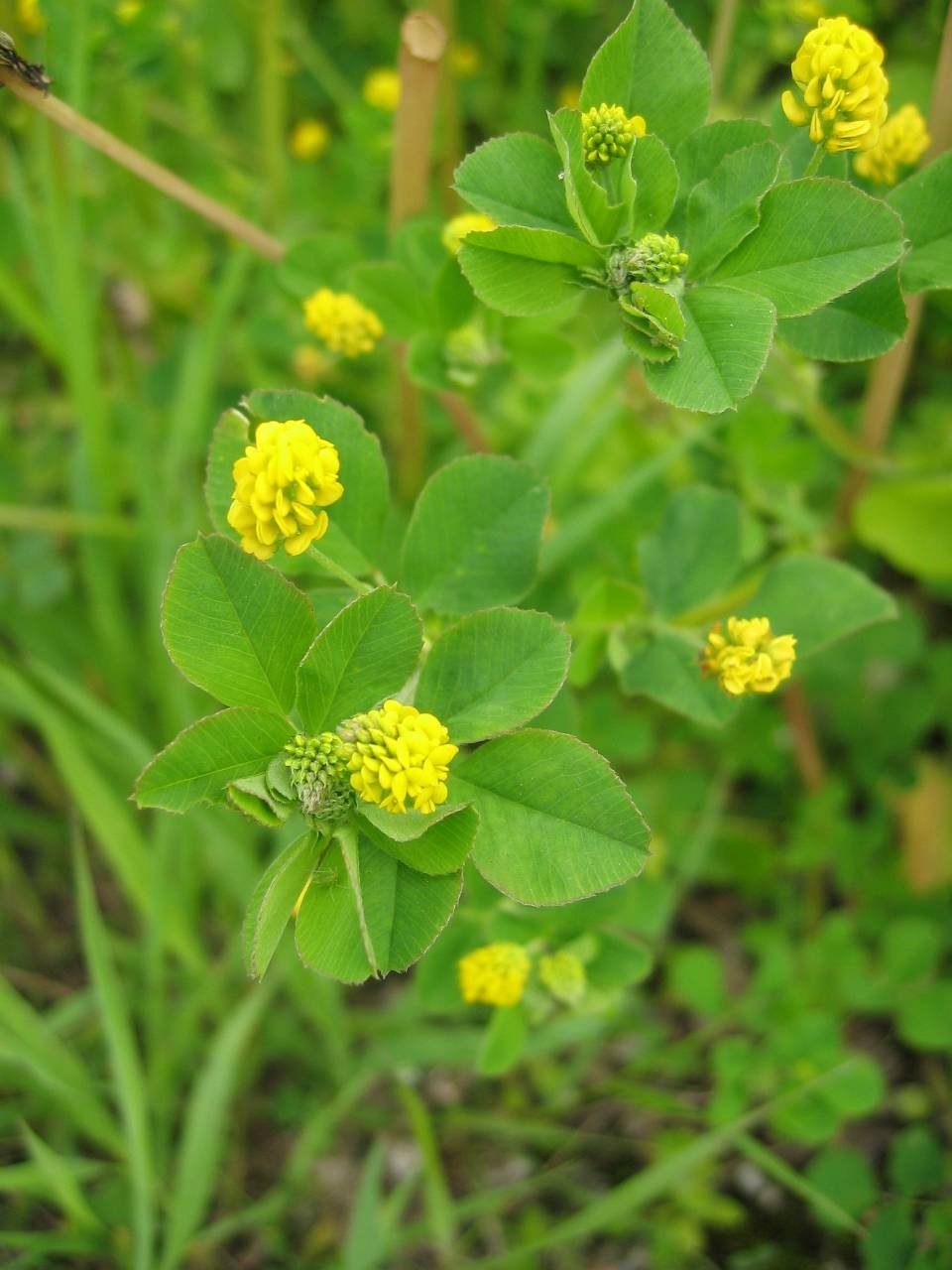
If your lawn has a low clover with little yellow flower heads that dry into tan, papery cones, you're likely looking at large hop clover. It's an annual, and it's often the lawn's way of telling you it's hungry.
How to get rid of itAll weeds A–Z
What is large hop clover?
Large hop clover identification starts with those tiny yellow flower heads. When they fade, the old flowers hang on and turn into light brown, papery heads that look like miniature hop cones, which is where the name comes from. It’s a European clover that’s now widespread in North America.
Unlike white clover, hop clover is a winter annual. Seeds sprout in fall, the plants stay small through winter, then grow and flower in late spring and early summer before dying in the heat. Because it’s a legume, it can make its own nitrogen, so it does well in lawns that aren’t being fed enough.
The common names are a little confusing. Trifolium campestre is called large hop clover in many turf guides and low hop clover in others. A smaller cousin, least hop clover, looks similar with even tinier heads. For a homeowner, the differences don’t change what you do about it.
Large hop clover identification: key features
- Leaves: three small oval leaflets with fine teeth toward the tip. The center leaflet has its own short stalk, so it sits a little farther out than the side two.
- Stems: slender, branching and often sprawling, sometimes a bit hairy and reddish.
- Flowers: tiny yellow pea-like flowers packed into round or oval heads, about 20 to 40 per head, on long stalks from the leaf joints.
- After bloom: heads turn tan and papery and stay on the plant. Each little flower holds one seed.
- Roots: shallow and fibrous. It pulls out easily.


Where large hop clover grows in Pennsylvania
Hop clover likes full sun and tolerates poor, dry soil. In central PA, look for it in thin lawns that rarely get fertilized, on sunny slopes and banks where the soil is shallow, along road edges and driveways, and in pastures and old fields.
It’s a common sight on new lawns and recently graded areas where the topsoil is thin. If it shows up across a whole sunny lawn, it’s a good hint that the grass needs more nitrogen and possibly a soil test.
Large hop clover look-alikes
Black medic is the most common mix-up, and the two grow side by side. Black medic has smaller flower heads, about 10 to 20 flowers each, and the flowers fall off after blooming, leaving black, coiled seed pods. Its leaflets usually end in a tiny point. Hop clover keeps its dried, tan flowers.
Yellow wood sorrel has heart-shaped leaflets that fold up at night and five-petaled yellow flowers that aren’t in a ball-shaped head. Bird’s-foot trefoil has larger, slipper-shaped flowers in small clusters and long, skinny pods.
Hop clover, black medic and wood sorrel all respond to similar lawn care, so you don’t need to be perfect to make progress.
How to get rid of large hop clover
Hand and mechanical. With shallow roots, small patches pull out easily, especially after a rain. Since it’s an annual, removing plants before they set seed in late spring makes a real dent in next year’s crop. Bagging clippings while it’s in bloom helps too.
Cultural. This is the long-term fix, because hop clover thrives where grass is underfed:
- Get a soil test through Penn State Extension and correct pH and nutrients.
- Fertilize the lawn appropriately, with fall being the most important time for cool-season grass in PA.
- Mow at 3 to 3.5 inches to shade the soil.
- Overseed thin areas in early fall so there’s no open soil for fall-sprouting seed.
- Water deeply during dry spells so the grass stays competitive.
Chemical. Clovers don’t respond well to 2,4-D alone. Extension services typically list broadleaf products containing dicamba, MCPP, triclopyr or fluroxypyr for clover-type weeds. Treat young, actively growing plants in fall or early spring, before flowering. A preemergence herbicide applied in late summer can also reduce fall germination, but it will stop grass seed too, so don’t use it where you plan to overseed. Read and follow the label (the label is the law) and confirm it’s labeled for your type of grass. In Pennsylvania, applying herbicide for hire requires a PA Dept. of Agriculture pesticide applicator certification, so a full-lawn program is a job for a licensed lawn-care company.
Keeping large hop clover from coming back
Think of hop clover as a symptom. A thick, well-fed lawn rarely has much of it. A regular fall feeding and overseeding routine does more than any spray.
Watch the sunny, dry parts of your yard where the soil is thin, like slopes and the strip next to the driveway. Those are the first places it will return. Topdressing thin areas with good topsoil before overseeding gives the grass a better foundation.
Some homeowners don’t mind a little clover in the lawn. It feeds bees and adds nitrogen. If it’s scattered and not crowding out grass, there’s no harm in letting some stay.
Questions we get about large hop clover
How do I tell hop clover from black medic?
Look at the flower heads after they bloom. Hop clover heads turn tan and papery and stay on the plant. Black medic flowers drop off, leaving small black, coiled seed pods.
Why is yellow clover taking over my lawn?
Hop clover thrives in thin, underfed, sunny lawns because it makes its own nitrogen. Feeding the grass properly and overseeding thin spots is the long-term fix.
Is large hop clover perennial?
No. It's a winter annual that sprouts in fall, flowers in late spring and early summer, and dies in summer heat. It comes back from seed.
Is hop clover safe for kids and pets?
Yes. It isn't considered toxic. Like white clover, it does attract bees when it's in bloom.
Weeds taking over a bed, slope or wet spot?
If hop clover keeps filling a thin, sunny slope, Muthler can add topsoil and reseed so the grass gets a real foothold. We rebuild beds, regrade and drain wet ground, clear overgrown brush and build patios and walls across Clinton, Lycoming, Centre and Union counties.
Get a free estimate(570) 397-9800Similar weeds


Further reading: Penn State Extension
Herbicides: always read and follow the product label. Applying pesticides for hire in Pennsylvania requires PA Dept. of Agriculture certification.