Yellow Sweetclover
Home / Weed identification / Yellow Sweetclover
Pennsylvania weed ID · Invasive herb
Yellow Sweetclover
Melilotus officinalis · Fabaceae (pea/legume family)
- Biennial
- Broadleaf
- Non-native
- Invasive
If your back field or roadside frontage is suddenly full of tall, bushy plants with sweet-smelling yellow flower spikes, it's probably yellow sweetclover.
How to get rid of itAll weeds A–Z
What is yellow sweetclover?
Yellow sweetclover identification is easiest in summer, when the plants are covered in yellow spikes and the air around them smells like fresh hay. It’s a biennial legume from Europe and Asia that was planted for years as livestock forage, soil-building cover crop and honey plant. It escaped and now grows wild along roads and in open ground across Pennsylvania.
It isn’t on the state noxious weed list, and it does feed bees. But in prairies, meadows, pastures and reclaimed land it can grow into dense stands that crowd out other plants, and its seed lasts a very long time in the soil.
Like other legumes, it partners with soil bacteria to pull nitrogen from the air, which lets it thrive on thin, poor ground where other plants struggle. That’s a big part of why it shows up on gravel shoulders and fill banks long before grass does.
Yellow sweetclover identification: what to look for
In its first year, sweetclover is a short, bushy plant you might not notice. In its second year it shoots up, blooms and dies after setting seed.
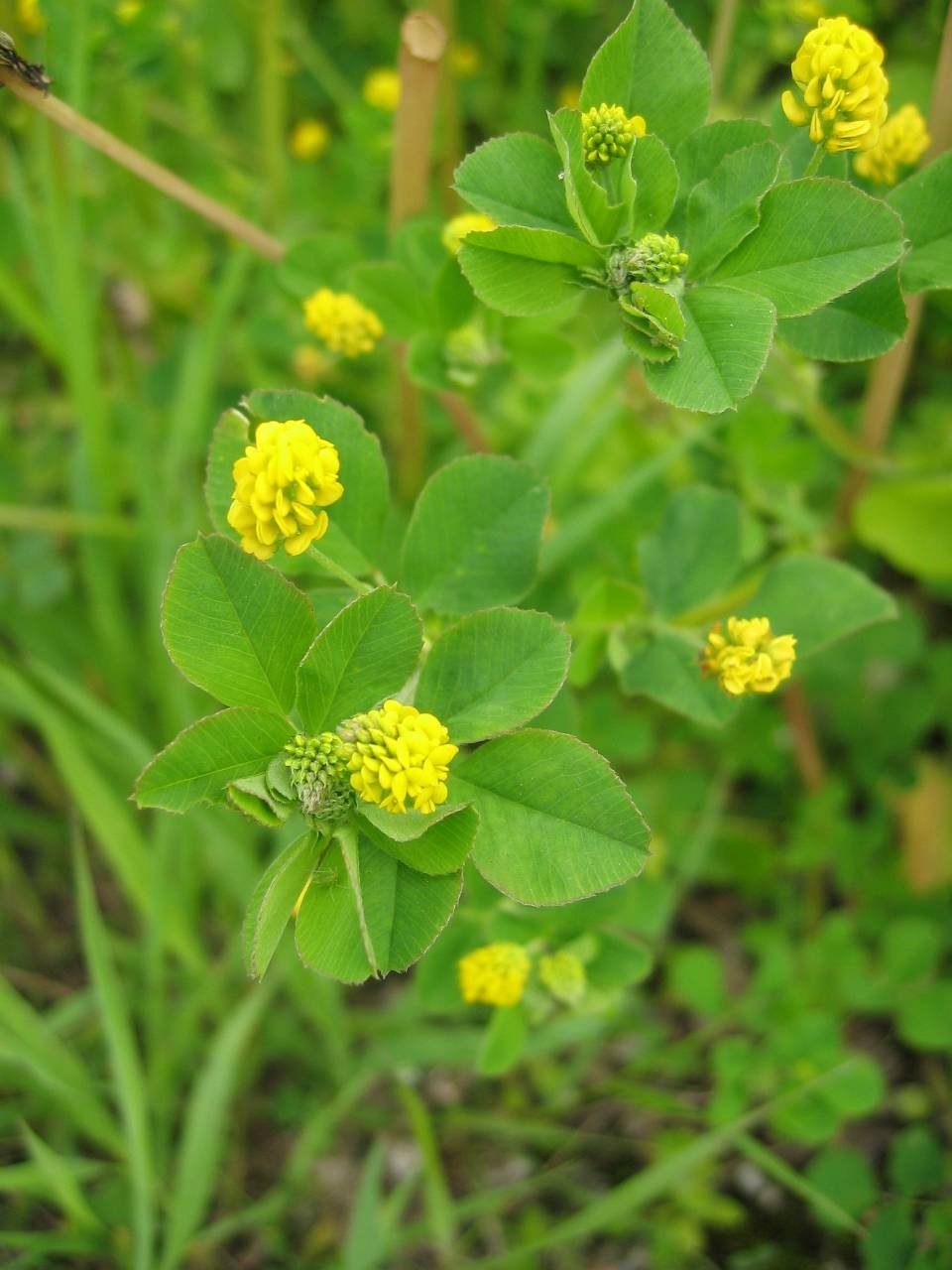
- Leaves: three narrow oval leaflets with fine teeth all the way around. The middle leaflet sits on a short stalk.
- Height: second-year plants are usually 2 to 6 feet tall, with many branches.
- Flowers: small yellow pea-shaped flowers packed along long, slender spikes from late spring through summer.
- Smell: crushed leaves and flowers smell sweet, like fresh-cut hay. That comes from a natural compound called coumarin.
- Root: a deep, thick white taproot.
White sweetclover is a close relative with white flowers and the same habits. It’s handled the same way.
First-year plants can be tricky. They look like a small, leafy, branching clover a foot or so tall, with no flowers. Crush a leaf and check for the sweet smell, and look for the fine teeth all around the leaflet edge.


Where it grows in Pennsylvania
Sweetclover loves dry, open, disturbed ground. In central PA you’ll find it on roadsides and railroad embankments, gravel lots, reclaimed strip-mine sites, old fields and pasture edges. It tolerates poor soils and does well where the ground is limestone-based or close to neutral.
It’s less common in maintained lawns, because regular mowing keeps it from flowering. The places it takes over are the ones nobody mows often: banks, back lots, construction fill and field margins.
Wind doesn’t move its seed far, but mowers, road graders, fill dirt and hay do. A stand along a township road can follow the shoulder for miles, and a load of contaminated fill can start a new one in a backyard.
Yellow sweetclover look-alikes
The plant it’s most often confused with is alfalfa. Alfalfa’s leaflets have teeth only near the tip and its flowers are purple in short, rounded clusters. Sweetclover’s leaflets are toothed all around and its yellow flowers run in long spikes.
Black medic is another yellow-flowered legume, but it stays low in lawns with small round flower clusters. Bird’s-foot trefoil has five leaflets per leaf and bigger flowers in small fans.
Crown vetch also lines PA roadsides, but it’s a sprawling vine-like plant with many small leaflets per leaf and pink-and-white flower clusters, so it’s easy to separate once you look closely.
How to get rid of yellow sweetclover
Sweetclover lives two years and spreads only by seed, so the key is simple: kill plants before they flower, and stay at it, since the seed bank can last for decades.
- Pull or dig: first-year plants and young second-year plants pull out best from moist soil in spring or fall. Get the top of the taproot, or it may resprout.
- Cut low: cut or mow second-year plants close to the ground before they bloom. Cutting too high leaves buds on the stem that can sprout and flower again, so check back a few weeks later.
- Bag flowering plants: if plants are already flowering or setting seed, cut them and bag the tops.
- Plant competition: reseed bare banks and field edges with grass or native mixes so seedlings have less room.
Herbicides: broadleaf products work best on rosettes and young plants in spring or fall, before bolting. Extension programs commonly list ingredients such as 2,4-D, dicamba, triclopyr and clopyralid for sweetclover in pastures and rough areas, with choices depending on the site. Read and follow the label, since the label is the law, and check grazing and haying restrictions. Applying herbicide for hire in PA requires a PA Department of Agriculture pesticide applicator certification, so larger fields or roadsides go to a licensed vegetation-management company.
Keeping it from coming back
Expect new seedlings for years, especially after any soil disturbance brings buried seed to the surface. Check cleared areas every spring and fall and pull young plants while they’re easy.
If you cut sweetclover for hay, cure it thoroughly. Moldy sweetclover hay can produce dicoumarol, a blood thinner that causes dangerous bleeding in cattle, so talk to your vet or extension office before feeding it.
On a small property, a few minutes of pulling in spring for two or three years usually wins. On larger ground, a steady mowing schedule plus thick grass is what keeps it in check.
Questions we get about yellow sweetclover
Is yellow sweetclover bad?
It feeds bees and fixes nitrogen, but it can form dense stands that crowd out pasture and meadow plants. Its seed lasts for decades, so stands grow if left alone.
Is sweetclover poisonous to livestock?
Fresh plants are fine. Moldy sweetclover hay or silage can contain dicoumarol, which stops blood from clotting and can cause serious bleeding. Cure hay well.
Will mowing kill yellow sweetclover?
Mowing low before it flowers can kill second-year plants and stop seed. Mowing too high lets it resprout from the stem and bloom again.
Weeds taking over a bed, slope or wet spot?
If sweetclover and other weeds have taken over a bank or back lot, Muthler can regrade it and get grass established so it's easy to mow. We rebuild beds, regrade and drain wet ground, clear overgrown brush and build patios and walls across Clinton, Lycoming, Centre and Union counties.
Get a free estimate(570) 397-9800Similar weeds


Further reading: Penn State Extension
Herbicides: always read and follow the product label. Applying pesticides for hire in Pennsylvania requires PA Dept. of Agriculture certification.