Wild Onion
Home / Weed identification / Wild Onion
Pennsylvania weed ID · Lawn broadleaf
Wild Onion
Allium canadense · Amaryllidaceae (onion family; formerly Liliaceae)
- Perennial
- Broadleaf
- Native
If your lawn has clumps of skinny, dark-green "grass" that grow faster than everything else and smell like onions when you mow, you've got wild onion or its cousin wild garlic. They're tough because they grow from bulbs, but steady effort wins.
How to get rid of itAll weeds A–Z
What is wild onion?
Wild onion identification starts with your nose. Crush a leaf and you’ll get a strong onion smell. Wild onion is a native perennial in the onion family that grows from a small underground bulb. Its close cousin, wild garlic, is a European plant and usually the more common lawn problem, so it helps to know which one you have.
Both plants green up in late fall, grow through winter and early spring when your lawn is mostly dormant, and then die back in summer heat. That’s why they stand out so much in March and April: they’re growing when the grass isn’t.
They spread mainly by bulbs and bulblets, which is why pulling and mowing alone don’t get rid of them.
Wild onion identification: key features
- Leaves: narrow, flat and solid, smooth and somewhat waxy, growing in clumps from the base.
- Smell: a strong onion scent when crushed or mowed.
- Bulb: small, white and covered in a fibrous, net-like coat, often with smaller bulblets attached.
- Flowers: a rounded cluster on a leafless stalk with star-shaped white to pale pink flowers in late spring. Many heads also carry tiny bulblets mixed in with the flowers, or only bulblets.
- Season: visible late fall to early summer; the tops fade in hot weather.
The key test against wild garlic is the leaf. Wild garlic leaves are round and hollow. Wild onion leaves are flat and solid.

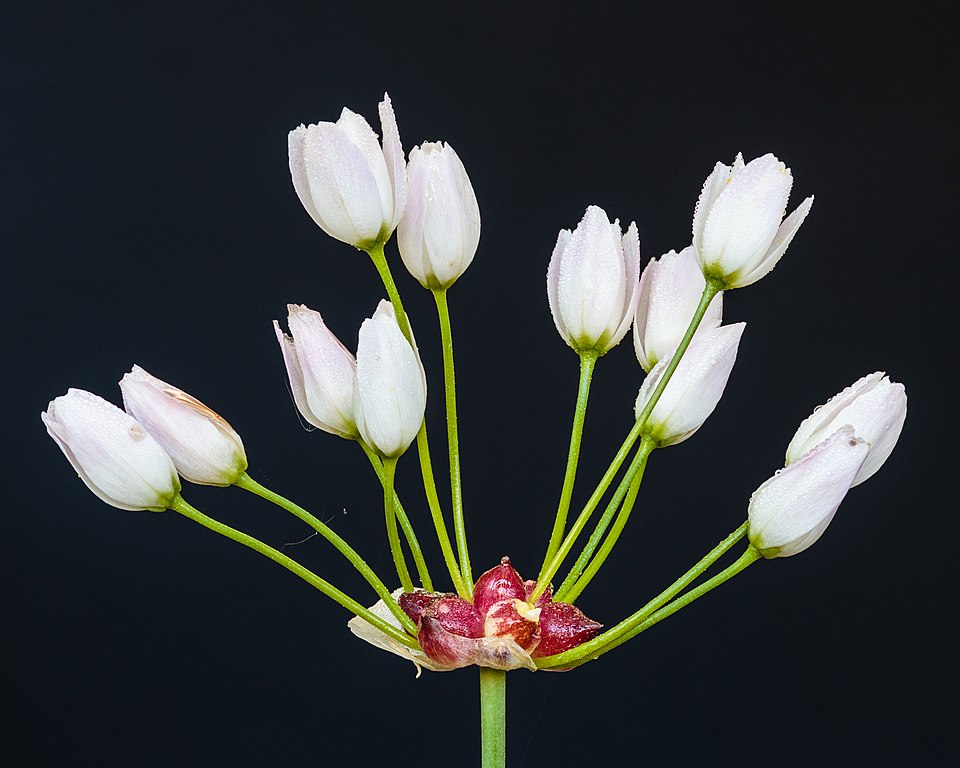
Where wild onion grows in Pennsylvania
Wild onion grows naturally in meadows, open woods, stream banks and roadsides across PA. In yards, it shows up in lawns, especially thin turf and newer lawns, and along bed edges and in garden beds.
It’s common on heavier soils that stay moist in spring. Bulbs can sit in the soil for years, so lawns on old pasture or farm ground in central PA often have a long history of onion and garlic.
You’ll notice the clumps most after the first warm days of spring. The grass is still waking up, but the onion is already several inches tall and darker green, so the lawn looks shaggy a few days after mowing. In early summer, once the heat arrives, the tops yellow and disappear until fall.
Wild onion look-alikes
Wild garlic is the main look-alike and is often the one actually growing in a PA lawn. Its leaves are round and hollow, and its flower heads are often all bulblets. Control is the same for both. Our wild garlic page covers it in more detail.
Star-of-Bethlehem also grows from bulbs in lawns and looks similar early in spring, but its leaves have a white stripe down the middle, and it has no onion smell. It’s toxic if eaten, so the onion smell is your safety check before anyone eats anything. Coarse grass clumps, like tall fescue, can look similar from a distance but have no smell and no bulb.
How to get rid of wild onion
Hand and mechanical. Pulling usually fails because the leaves snap off and the bulb stays in the ground. Instead, dig clumps out with a trowel or narrow spade when the soil is moist, in late fall through early spring. Get the main bulb and the little bulblets around it, and bag them. Regular mowing won’t kill wild onion, but it does weaken it and keeps it from producing aerial bulblets.
Cultural. Thick turf makes it harder for new bulblets to get started:
- Mow at 3 to 3.5 inches.
- Overseed thin areas in early fall.
- Fertilize based on a soil test.
- In beds, mulch and dig out clumps as they appear.
Chemical. There are no preemergence products that stop wild onion. Penn State Extension lists postemergence options including three-way mixes of 2,4-D, MCPP and dicamba, metsulfuron (turf only), sulfentrazone with metsulfuron (turf only), and glyphosate for non-turf areas where you want to kill everything. The narrow, waxy leaves shed spray, so results come slowly. Treat in late fall after new shoots appear and again in late winter to early spring, and plan on repeating for a few seasons, since bulbs keep sprouting. Read and follow the label (the label is the law), and make sure the product is labeled for your lawn grass type and site. In Pennsylvania, applying herbicide for hire requires a PA Dept. of Agriculture pesticide applicator certification, so a full-lawn program should go to a licensed lawn-care company.
Keeping wild onion from coming back
Wild onion is a multi-year project. Bulbs can stay dormant in the soil, so new shoots will keep appearing for a couple of seasons even after good control.
Stay consistent: dig or treat each fall and spring, keep mowing so the plants don’t make bulblets, and keep the lawn thick. Each year you’ll see fewer clumps.
Some homeowners simply live with a little wild onion, since it fades on its own by early summer. Either way, don’t move soil from an infested area into clean beds.
Questions we get about wild onion
What's the difference between wild onion and wild garlic?
Wild onion leaves are flat and solid. Wild garlic leaves are round and hollow. Both smell like onion, both grow from bulbs, and both are controlled the same way.
Why won't wild onion pull out?
The leaves usually snap off and leave the bulb in the ground, where it regrows. Dig the clump out with a trowel when the soil is moist.
Is wild onion safe for dogs?
No. Plants in the onion family are toxic to dogs and cats if eaten. Most pets don't eat much, but keep an eye on them.
Does a preemergence herbicide stop wild onion?
No. Wild onion grows from bulbs, so preemergence products don't work. Use digging or postemergence treatment in late fall and early spring.
Weeds taking over a bed, slope or wet spot?
If onion and garlic have taken over a thin, tired lawn, Muthler can regrade and reseed so you start with thick new turf. We rebuild beds, regrade and drain wet ground, clear overgrown brush and build patios and walls across Clinton, Lycoming, Centre and Union counties.
Get a free estimate(570) 397-9800Similar weeds


Further reading: Penn State Extension
Herbicides: always read and follow the product label. Applying pesticides for hire in Pennsylvania requires PA Dept. of Agriculture certification.