Poison Ivy
Home / Weed identification / Poison Ivy
Pennsylvania weed ID · Toxic plant
Poison Ivy
Toxicodendron radicans · Anacardiaceae (cashew or sumac family)
- Perennial (woody)
- Woody vine / shrub
- Native
- Toxic / hazard
Almost every yard in Pennsylvania that backs up to woods has some poison ivy somewhere. Knowing exactly what it looks like in every season, and how to remove it without a week of itching, is worth five minutes of reading.
How to get rid of itAll weeds A–Z
Every part of poison ivy contains urushiol, an oil that causes a blistering rash, even on dead plants and bare winter vines. Wear long sleeves, long pants, closed shoes, eye protection and waterproof gloves (nitrile under heavy work gloves). Don't mow, string-trim or chip it, which spreads the oil. Never burn it; the smoke can cause severe reactions in your lungs and eyes. After contact, wash skin with soap and cool to lukewarm water as soon as possible, and wash clothing, tools and gloves separately. Get medical care right away for trouble breathing, a rash near your eyes, mouth or genitals, or a rash covering a large area. For accidental swallowing or exposure questions, call Poison Control at 1-800-222-1222.
What is poison ivy?
Good poison ivy identification is the best way to protect yourself, your kids and your dog. Poison ivy is a native woody plant that grows as a low groundcover, a small shrub, or a vine climbing high into trees. It feeds birds and wildlife, but its oil, urushiol, causes an itchy, blistering rash in most people.
The oil is on every part of the plant: leaves, stems, roots and berries. It stays active on dead plants and bare winter vines, and it rubs off onto gloves, tools, clothing and pet fur. Many rashes come from touching something that touched the plant.
Poison ivy isn’t on Pennsylvania’s noxious weed list. It’s simply a native plant you want well away from paths, play areas and gardens.
Poison ivy identification: what to look for
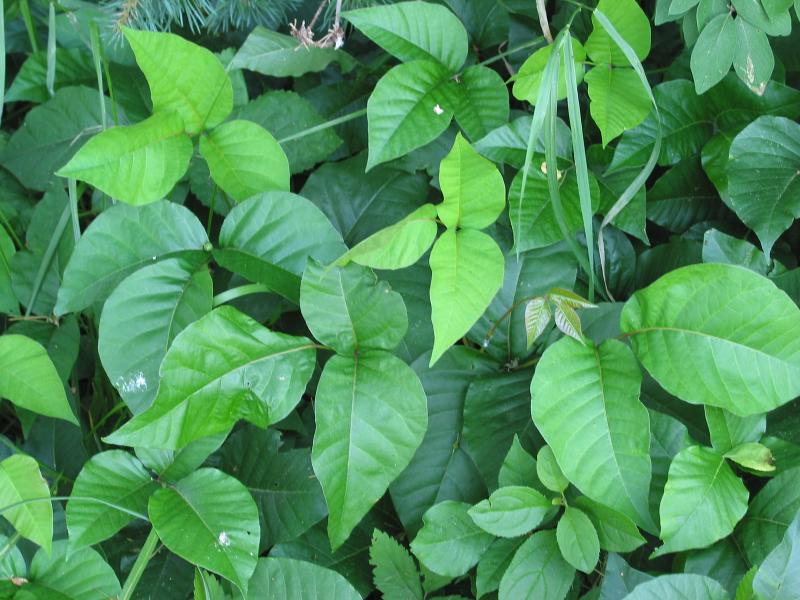
- Three leaflets: each leaf has three leaflets. The middle one sits on a noticeably longer stalk than the two side leaflets.
- Leaf edges: they can be smooth, wavy or have a few big notches, even on the same plant. Leaves may be shiny or dull.
- Arrangement: leaves alternate along the stem. They never grow in opposite pairs.
- Color: new spring leaves are often reddish. Summer leaves are green. Fall color is red to orange.
- Vines: climbing vines are covered in brown, hairy aerial rootlets, so they look like a fuzzy rope on a tree trunk. In winter that rope is often the only sign.
- Berries: clusters of small whitish berries from late summer into winter.
When in doubt, treat it as poison ivy and don’t touch it with bare skin.
Where it grows in Pennsylvania
Poison ivy grows statewide, especially where woods meet open ground: fence lines, hedgerows, the back edge of a lawn, stone walls, utility poles, roadsides and river and stream banks. Birds drop the seeds wherever they perch, so it pops up under bird feeders, along fences and at the base of trees.
It tolerates sun or shade and wet or dry soil. On wooded lots in central PA, it’s common to find big, old vines several inches thick climbing mature trees.
Poison ivy look-alikes
Virginia creeper is the most common mix-up, but it has five leaflets fanning from one point. Young boxelder and maple seedlings have three-part or lobed leaves, but they grow in opposite pairs. Blackberries and raspberries have three leaflets too, but their canes are prickly.
Fragrant sumac is a harmless native shrub with three smaller, rounded, lobed leaflets. Eastern poison oak is uncommon in Pennsylvania and mostly limited to the southeast. Poison sumac grows in wetlands and has seven or more leaflets.
How to get rid of poison ivy safely
Suit up first: long sleeves, long pants, closed shoes, eye protection and waterproof gloves.
- Pull or dig small patches: works best when the soil is moist. Get as much root as possible, since pieces resprout. Use a plastic bag over your gloved hand, pull, and turn the bag inside out over the plant.
- Cut climbing vines: cut the vine near the ground and again about a foot higher, then remove the middle section. Let the upper vine die in place instead of ripping it off the tree.
- Smother: cardboard or heavy black plastic left in place for a full season or longer can kill a patch. Thick mulch only stops seedlings.
- Herbicides: Penn State notes that systemic products move into the roots and are the most reliable for established plants. Triclopyr, glyphosate and 2,4-D are commonly recommended, applied to full, healthy leaves. For thick vines, cut near the ground and treat the fresh stump right away with a concentrated product labeled for cut-stump use. That works best late summer into fall.
Read and follow the herbicide label (the label is the law) and check it’s labeled for your site. Glyphosate kills any plant it touches. Homemade remedies like salt, bleach or household vinegar don’t kill the roots and can damage soil, so skip them. Applying herbicide for hire in Pennsylvania requires a PA Department of Agriculture pesticide applicator certification, so big jobs belong to a licensed lawn-care or vegetation-management company.
Bag all plant material and put it in the trash. Never compost it, and never burn it.
Keeping it from coming back
Expect resprouts from roots. Check the area every few weeks for the first season and deal with new shoots while they’re small.
Clean up carefully. Wash tools with soap and water or wipe them with rubbing alcohol, wash work clothes separately on a long hot cycle, and wipe down boots and anything you sat on. Bathe pets that ran through a patch. Keep mowed paths and lawn edges clear so new seedlings stand out early.
If a patch is large, climbing high into trees, or right beside a spot the family uses every day, hiring a licensed pro is often the smart, itch-free choice.
Questions we get about poison ivy
Can you get poison ivy in winter?
Yes. Bare vines and roots still carry urushiol all winter, and the oil stays active on dead plants for years.
Can my dog give me poison ivy?
Yes. Pet fur can carry the oil to you. Bathe pets with gloves on if they've been in a patch.
Is it safe to burn poison ivy?
No. Smoke carries urushiol and can cause severe reactions in the lungs, eyes and throat. Bag it and trash it.
What should I do right after touching it?
Wash skin with soap and cool to lukewarm water as soon as you can, then wash clothes, gloves and tools separately. See a doctor for severe rashes or any trouble breathing.
Weeds taking over a bed, slope or wet spot?
Weeds win where beds are thin, ground stays wet or brush has taken over. We rebuild beds, regrade and drain wet ground, clear overgrown brush and build patios and walls across Clinton, Lycoming, Centre and Union counties.
Get a free estimate(570) 397-9800Similar weeds
 Japanese HoneysuckleLonicera japonica
 Oriental BittersweetCelastrus orbiculatus
 English IvyHedera helix
Further reading: Penn State Extension
Herbicides: always read and follow the product label. Applying pesticides for hire in Pennsylvania requires PA Dept. of Agriculture certification.