Japanese Barberry
Home / Weed identification / Japanese Barberry
Pennsylvania weed ID · Invasive shrub & tree
Japanese Barberry
Berberis thunbergii · Berberidaceae (barberry family)
- Woody shrub
- Woody
- Non-native
- PA Class B noxious weed
- Toxic / hazard
That tidy, spiny red or green hedge by the front walk may be Japanese barberry. It was planted everywhere for decades, but Pennsylvania now lists it as a noxious weed, and it's spread deep into our woods.
How to get rid of itAll weeds A–Z
Barberry has sharp spines. Wear heavy leather gloves, long sleeves and eye protection when pulling or cutting it. Barberry thickets are good habitat for ticks, so tuck pants into socks, use repellent and check yourself for ticks afterward.
What is Japanese barberry?
Learning Japanese barberry identification helps you spot it in two places: the landscape bed and the woods. It’s a dense, spiny shrub from Japan that nurseries sold for decades in green, red, purple and gold varieties. Birds and other animals ate the berries and carried the seeds into forests, where it now forms solid thickets under the trees.
Pennsylvania added Japanese barberry to its noxious weed list in 2021, with the sales ban phased in over two years. Existing plants aren’t required to come out, but removal is strongly encouraged.
There’s also a health angle. Researchers in Connecticut found that dense barberry thickets hold humid conditions that favor blacklegged ticks, the ones that carry Lyme disease, and that areas where barberry was controlled had fewer infected ticks.
Japanese barberry identification: key features
- Spines: a single, thin spine, a half inch or less, at each node. Look-alikes have spines in threes.
- Leaves: small, spoon-shaped, smooth-edged and clustered along the stem, up to about an inch long. Wild plants are usually green. Landscape varieties may be red, purple or gold.
- Inner wood: scratch a stem or cut a root and you’ll see bright yellow wood. That’s one of the surest tests.
- Flowers: small, pale yellow and six-petaled, hanging under the branches in mid-spring.
- Berries: bright red and oblong, about a quarter inch long, hanging on from late summer into winter.
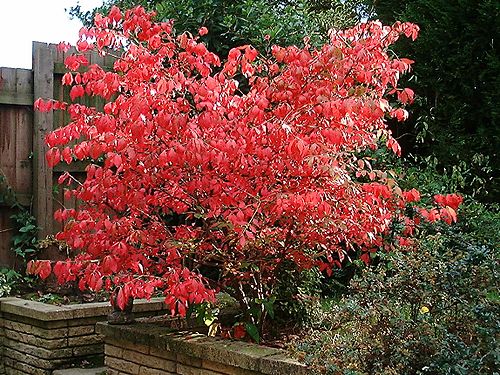
- Timing: leafs out earlier and holds leaves later than most native shrubs. Fall color is orange to red.
In the wild it stays fairly low, usually 2 to 6 feet, but forms a solid, prickly mass that’s miserable to walk through.


Where it grows in Pennsylvania
You’ll find barberry in old foundation plantings and hedges in nearly every town, and it’s common in woods across the state, from dry hillsides to wet stream bottoms. It tolerates deep shade, which lets it take over the forest floor where most invasives can’t.
On wooded lots in central PA, it often grows alongside multiflora rose, Japanese stiltgrass and bush honeysuckle. Deer avoid browsing it, which gives it a big advantage over native shrubs they eat.
Because birds drop seeds wherever they perch, barberry often appears first along fence rows, under power lines and at the edge of a lawn that backs up to woods. A few plants can turn into a thicket in a handful of years, so it’s worth removing early when the shrubs are still small and easy to pull.
Japanese barberry look-alikes
Common (European) barberry and the rare native Allegheny barberry both have three-pronged spines, and their leaves have toothed edges. Japanese barberry has single spines and smooth leaf edges.
Multiflora rose also forms prickly thickets, but it has hooked thorns and compound leaves. Burning bush is another invasive landscape shrub with red fall color, but it has no spines and has corky ridges on the stems.
How to get rid of Japanese barberry
Barberry has a shallow root system, which makes physical removal very doable on a home scale. Anything left in the ground can resprout, so get the root crown.
- Pull or dig: seedlings and small shrubs pull out by hand, with heavy gloves, when the soil is moist. Larger shrubs come out with a spade, a mattock or a weed wrench.
- Machine removal: for big hedges or woodland thickets, a skid steer or mini excavator can pull shrubs root and all.
- Best timing: early spring or late fall, when barberry is green and natives are bare. Winter work is fine as long as the ground isn’t frozen.
- Cutting alone won’t do it: cut shrubs resprout. Follow up by digging the crown or treating the stump.
- Herbicide options: extension services recommend cut-stump or basal-bark treatment with triclopyr, or a glyphosate stump treatment applied right after cutting. Foliar spot spraying of resprouts with glyphosate, triclopyr or a mix works from June through early fall.
Read and follow the label (the label is the law) and make sure the product is labeled for your site, particularly in wet woods or near streams. Applying herbicide for hire in Pennsylvania requires a PA Department of Agriculture pesticide applicator certification, so large woodland jobs should go to a licensed vegetation-management company.
Keeping it from coming back
Barberry seeds stay in the ground and keep arriving from neighboring properties, so plan to walk the area each spring and fall and pull seedlings while they’re small.
Replace removed foundation shrubs with natives such as inkberry, ninebark, summersweet or dwarf fothergilla, and mulch the bed. In the woods, open areas left by removal are best replanted or allowed to fill with native shrubs and ferns before something else moves in.
Bag and trash any branches carrying berries rather than piling them at the woods edge, where the seeds can still sprout.
Questions we get about japanese barberry
Is Japanese barberry illegal in Pennsylvania?
It's a Class B noxious weed. It can no longer be sold or propagated in PA. Homeowners aren't required to remove existing plants, but removal is strongly encouraged.
Does barberry really attract ticks?
Research in Connecticut found barberry thickets create humid conditions that favor blacklegged ticks, and controlling barberry reduced infected tick numbers.
Are red-leaf barberry varieties a problem too?
Yes. Red, purple and gold varieties are the same species, and most produce berries and seed that birds carry into the woods. The PA listing covers the species, not just the green form.
What should I plant instead?
Native shrubs like inkberry, ninebark, summersweet or dwarf fothergilla make good replacements for barberry in beds and hedges.
Weeds taking over a bed, slope or wet spot?
If an old barberry hedge or woodland thicket is more than you want to tackle by hand, our crew can pull it out by machine and rebuild the bed with new plants and mulch. We rebuild beds, regrade and drain wet ground, clear overgrown brush and build patios and walls across Clinton, Lycoming, Centre and Union counties.
Get a free estimate(570) 397-9800Similar weeds


Further reading: Penn State Extension · PA Dept. of Agriculture Noxious Weed Control List
Herbicides: always read and follow the product label. Applying pesticides for hire in Pennsylvania requires PA Dept. of Agriculture certification.