Hemp Dogbane
Home / Weed identification / Hemp Dogbane
Pennsylvania weed ID · Toxic plant
Hemp Dogbane
Apocynum cannabinum · Apocynaceae (dogbane family)
- Perennial
- Broadleaf
- Native
- Toxic / hazard
If a patch of what looks like milkweed keeps spreading out of the field edge into your yard — but its stems are reddish and branching and the pods are skinny — it's probably hemp dogbane.
How to get rid of itAll weeds A–Z
Hemp dogbane is poisonous if eaten. Every part of the plant contains compounds that affect the heart, and it stays toxic when dried in hay. Keep children and pets from chewing on it, and never let it into livestock feed. The milky sap can irritate skin, so wear gloves and long sleeves when pulling or cutting it, keep sap away from your eyes, and wash your hands afterward. If someone swallows part of the plant, call Poison Control at 1-800-222-1222 right away; for animals, call your veterinarian.
What is hemp dogbane?
Hemp dogbane is a native perennial that spreads by deep underground rhizomes and forms dense patches in fields, roadsides and the edges of yards. It’s the plant Native Americans used for strong cord and fiber, which is where the name Indian hemp comes from. Hemp dogbane identification matters for two reasons: it’s poisonous, and it’s very easy to mix up with milkweed.
As a native plant it has a place in wild areas. The problems start when it creeps into gardens, landscape beds, pastures and hayfields, where it’s hard to get rid of and can sicken livestock.
Hemp dogbane identification: key features
Dogbane comes up in late spring and grows into an upright, branching plant usually 3 to 4 feet tall. Look for these features together.
- Stems: Smooth and reddish-brown, branching in the upper half of the plant. Break a stem or leaf and milky white sap oozes out.
- Leaves: In opposite pairs, smooth-edged, oval to lance-shaped, 2 to 5 inches long on short stalks.
- Flowers: Clusters of small white to greenish-white bell-shaped flowers at the tips of the stems and branches in early to midsummer.
- Pods: Long, slender, curved pods, often 4 to 8 inches, that hang down, frequently in pairs. In fall they split open and release seeds with tufts of silky white hair that float on the wind.
- Roots: Deep, spreading rhizomes. Pull one stem and you’ll see it’s connected to the rest of the patch.

Where it grows in Pennsylvania
Hemp dogbane grows statewide in open, sunny places: field margins, pastures, hayfields, roadsides, fence rows and stream banks. It handles both damp and fairly dry soil, which is why you’ll see it along river-valley fields and on dry road shoulders alike.
Around homes, it usually comes from a neighboring field or roadside and creeps in by rhizome along the edge of a lawn or into a perennial bed. Once in a bed it’s hard to remove without digging the whole area.
Hemp dogbane look-alikes
The big one is common milkweed, which also has milky sap and opposite leaves. Milkweed has a thick green stem that usually doesn’t branch, broad fuzzy leaves, pink ball-shaped flower clusters and fat, upright, warty pods. Dogbane is slimmer, branched, reddish and smooth, with white bell flowers and long, skinny, drooping pods.
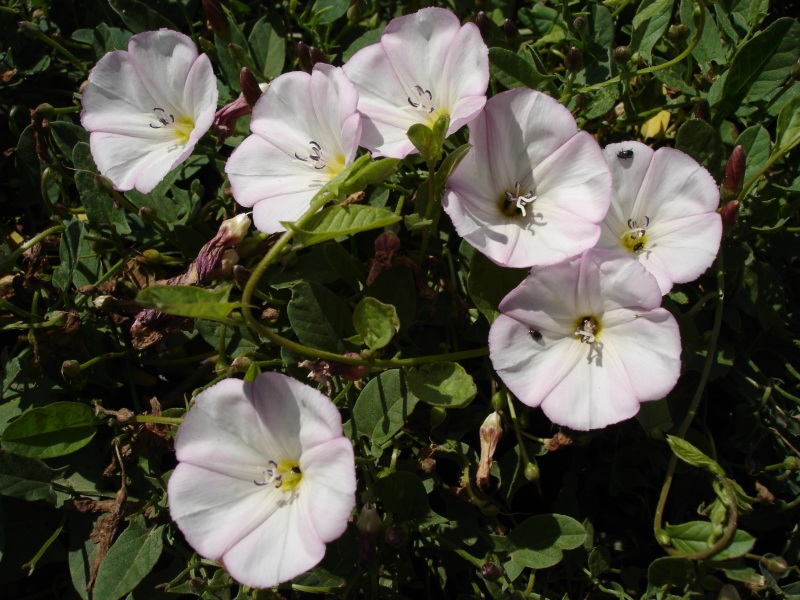
Getting this right matters if you’re trying to plant or protect milkweed for monarch butterflies. Spreading dogbane is a shorter native relative with pink-striped bells; horsenettle is another spreading perennial in the same spots, but it’s prickly and has no milky sap.
How to get rid of hemp dogbane
Be realistic: this is one of the toughest perennial weeds to clear. The rhizomes run deep, and new shoots keep coming from root pieces left behind. Plan on several seasons of work.
- Dig in beds: In a garden or landscape bed, dig out as much of the rhizome as you can with gloves on, then keep pulling new shoots as soon as they appear. Every time you remove the top growth you draw down the energy stored in the roots.
- Mow: In fields and large areas, mowing in spring and summer stops seed production and weakens the patch, though it won’t kill it on its own.
- Smother: For small patches near a bed, a thick layer of mulch over cardboard can slow it down, but shoots will find the edges.
- Herbicide: Extension services list products containing fluroxypyr, dicamba, or 2,4-D combined with triclopyr as effective on dogbane in pastures and non-crop areas. A single application rarely does it. Mowing in late spring or summer followed by a treatment of healthy regrowth later in the season tends to work better than spraying once.
Read and follow the product label; the label is the law. Many of these products are labeled for pastures or rights-of-way and not for use in vegetable gardens or around ornamentals, so confirm the site is on the label and check grazing and haying restrictions. Applying herbicide for hire in Pennsylvania requires a PA Department of Agriculture pesticide applicator certification, so treating a pasture or large field belongs with a licensed applicator.
Keeping hemp dogbane from coming back
Watch the edge where your yard meets a field or roadside. Pulling or mowing the first shoots that cross that line each spring is far easier than digging out an established patch later.
In pastures and hayfields, keep the grass stand thick and well-fertilized so dogbane has less room. Check hay for dogbane before feeding, since it stays toxic after drying.
Cut or pull plants before the pods split in late summer so the fluffy seed doesn’t drift into new ground. And if you clear a patch from a bed, don’t till the area and walk away; tilling chops the rhizomes into pieces that can each sprout. Keep pulling regrowth through the following season until it stops.
Questions we get about hemp dogbane
Is hemp dogbane poisonous?
Yes. All parts contain cardiac glycosides that affect the heart. Livestock have died from eating it in pasture or hay. Keep kids and pets away from it and call Poison Control at 1-800-222-1222 if someone eats it.
How do I tell hemp dogbane from milkweed?
Dogbane has a reddish, branching stem, smooth leaves, small white bell flowers and long skinny pods that hang down. Milkweed has a thick green unbranched stem, fuzzy leaves, pink flower balls and plump upright pods.
Is hemp dogbane native to Pennsylvania?
Yes, it's a native plant. That's why it's worth leaving in wild areas where it isn't causing trouble, and controlling only where it's invading beds, lawns or pastures.
Why does dogbane keep coming back after I pull it?
It spreads from deep rhizomes. Pulling the top leaves the roots behind. Keep removing new shoots and expect it to take a few seasons to wear the roots down.
Weeds taking over a bed, slope or wet spot?
If dogbane has taken over a perennial bed, we can strip and rebuild the bed with fresh soil and mulch so you're starting clean. We rebuild beds, regrade and drain wet ground, clear overgrown brush and build patios and walls across Clinton, Lycoming, Centre and Union counties.
Get a free estimate(570) 397-9800Similar weeds


Further reading: Penn State Extension
Herbicides: always read and follow the product label. Applying pesticides for hire in Pennsylvania requires PA Dept. of Agriculture certification.