Goosegrass
Home / Weed identification / Goosegrass
Pennsylvania weed ID · Grassy weed
Goosegrass
Eleusine indica · Poaceae (grass family)
- Summer annual
- Grass
- Non-native
If there's a flat, star-shaped clump of grass with a silver center growing in the worn spot by your driveway, it's probably goosegrass, not crabgrass.
How to get rid of itAll weeds A–Z
What is goosegrass?
Goosegrass is a summer annual grass that thrives where nothing else will: compacted, beaten-down soil that gets a lot of foot or tire traffic. Good goosegrass identification matters because it’s often mistaken for crabgrass, and it sprouts later, so a crabgrass preventer applied on the usual schedule can miss it.
Each plant lives one season and dies with the first hard frost. It comes back only from seed, so the game plan is stopping seed and fixing the soil conditions that let it in.
Goosegrass identification: what to look for
Goosegrass grows in a flat, tight rosette, pressed against the ground. Look for these features:
- Silver center: the base of the plant, where the stems fan out, is whitish to silvery. That’s why it’s sometimes called silver crabgrass.
- Leaves: smooth, folded, medium to dark green blades, a quarter to half inch wide. They feel slick compared to crabgrass.
- Ligule: a short, jagged membrane at the base of the blade, split in the center. No auricles.
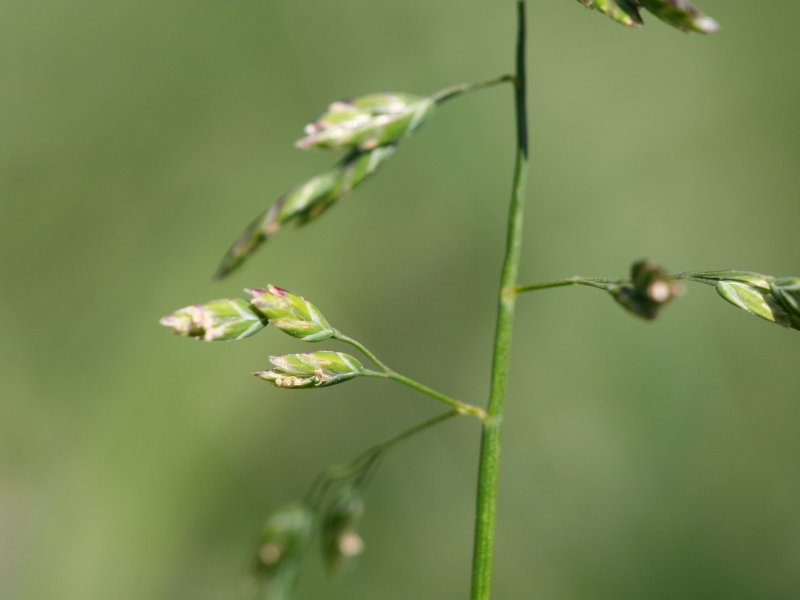
- Seedhead: two to seven flat spikes spreading from the top of the stem, with seeds packed in two rows like a zipper.
- Roots: tough and fibrous. Pulling a mature plant from hard ground takes real effort.
Its low growth lets it survive even very short mowing, so it stays put in lawns all summer.


Where it grows in Pennsylvania
Across PA, goosegrass shows up wherever soil gets packed hard. Think the corner of the lawn kids cut across, the strip next to the driveway where cars pull off, baseball infields, sidewalk cracks and the edges of patios and walkways.
Central PA’s clay soils make the problem worse because they compact easily, especially when they’re walked on or driven over while wet. Full sun and thin turf seal the deal. If you see goosegrass in the same worn spots every summer, take that as a clue that the soil there needs attention.
Seed travels on mower wheels, shoes and equipment, and in soil hauled from one place to another. That’s how a new patch can show up at the edge of a freshly graded area or along a new walkway the first summer after construction.
Goosegrass look-alikes
Large crabgrass is the usual mix-up. Crabgrass has hairy, lighter green, wider leaves, a green rather than silver center, and stems that root at the joints as they spread. Its seedhead spikes are thin fingers, not zippers.
Smooth crabgrass is less hairy but has the same thin finger-like spikes. Annual bluegrass grows in compacted spots too, but it’s a cool-season weed with soft, boat-tipped leaves and fluffy seedheads in spring.
How to get rid of goosegrass
Goosegrass is easier to prevent than to kill once it’s established, so timing is everything.
Hand removal. Pull or dig young plants with a trowel or weeding knife while they’re small and the soil is moist. Mature plants in hard soil take some prying. Get them out before July, when seedheads start to form.
Cultural control. Fixing compaction is the real cure. Core aerate the lawn in early fall, add organic matter like compost when you topdress or renovate, and redirect foot or vehicle traffic away from the worst spots. Fertilize on a regular schedule, water deeply during drought, and overseed thin areas so grass fills the gaps.
Chemical control. Preemergence herbicides such as prodiamine, pendimethalin and dithiopyr stop seeds from sprouting. Penn State notes goosegrass needs warmer soil than crabgrass, so a single early spring application may wear off before it sprouts. A second application several weeks after the first is common where both weeds are a problem. For plants already up, selective postemergence options include mesotrione, and they work best on young plants before they tiller.
- Don’t apply a preemergence product where you plan to seed grass soon; it stops grass seed too.
- Read and follow the product label. The label is the law, and it tells you which grasses and sites the product is safe for.
- Applying herbicide for hire in Pennsylvania requires a PA Department of Agriculture pesticide applicator certification, so full lawn programs belong with a licensed lawn-care company.
Keeping it from coming back
Loosen compacted soil, keep traffic off soggy lawns, and build a dense stand of grass. When a spot simply gets too much traffic for grass to survive, it may be time for a stepping-stone path or a widened walkway instead of fighting the same battle every summer.
Keep an eye on the spots where it grew this year. Goosegrass tends to return to the exact same places, so those are the areas to aerate, overseed and, if needed, treat on time next spring.
If goosegrass keeps growing out of your paver joints, the sand has likely washed out. Re-sanding with polymeric sand helps lock the joints, as explained in our polymeric sand vs. regular sand guide.
Questions we get about goosegrass
Is goosegrass the same as crabgrass?
No. Both are summer annual grasses, but goosegrass has a silver center, smooth folded leaves and zipper-like seedheads. It also sprouts a few weeks later than crabgrass.
Why does my crabgrass preventer miss goosegrass?
Goosegrass germinates in warmer soil, often after an early spring preventer has started to wear off. A second, later application is often needed.
Will goosegrass come back next year?
The plants die with frost, but the seeds they dropped will sprout next spring unless you prevent them or fix the conditions.
What causes goosegrass in a lawn?
Mostly compacted soil, heavy traffic and thin turf in full sun. Aeration and thicker grass are the long-term fix.
Weeds taking over a bed, slope or wet spot?
If foot traffic keeps wearing a bare goosegrass path across your lawn, Muthler can build a paver or stone walkway that handles the traffic for you. We rebuild beds, regrade and drain wet ground, clear overgrown brush and build patios and walls across Clinton, Lycoming, Centre and Union counties.
Get a free estimate(570) 397-9800Similar weeds


Further reading: Penn State Extension
Herbicides: always read and follow the product label. Applying pesticides for hire in Pennsylvania requires PA Dept. of Agriculture certification.